ManyChat and Chatfuel do the same basic job: they automate conversations on Instagram, Messenger and WhatsApp without you writing code. Put their feature lists side by side and they blur together.
The choice is easier once you stop comparing features and compare two things instead: how many channels you need, and how each one charges.
ManyChat charges by active contact, starting at $17 a month for 250. Chatfuel charges a flat $49 a month with unlimited active contacts and a cap on AI usage instead. Pick ManyChat if your audience is small or your budget is tight. Pick Chatfuel if your contact count is large or unpredictable, because that is where per-contact pricing turns.
What each platform is built for
ManyChat is built around growing and working an audience on Meta channels. Its structure gives that away: everything is organised by contacts, and the plans are ladders of how many of them you talk to each month. It is the more mature product on Instagram specifically, and the one most marketers reach for first.
Chatfuel positions itself around selling and supporting with AI. Its own plan descriptions split its audience in two: teams starting with customer automation, and teams ready to sell and support with AI. The unit it worries about is not how many people you talk to but how much automated work you generate.
Neither is a CRM, and neither is trying to be. If you need pipelines, invoicing or campaign management, that is a different tool alongside whichever of these you pick.
Channels covered
Both cover Instagram, Messenger and WhatsApp, which is where most of this market lives.
The difference is that ManyChat meters them. Its free and entry plans cap you at two channels, the $39 Pro plan raises that to three, and unlimited channels only arrives at $99 Business. Chatfuel does not tier its channels the same way.
For most people this is a non-issue — two channels covers Instagram plus one more. It becomes an issue the moment you want Instagram, Messenger and WhatsApp running together, which on ManyChat means the $39 tier at minimum.
One thing neither pricing page tells you: WhatsApp is not really theirs to sell. That channel runs on Meta’s API, and Meta bills the messages separately from whatever the platform charges. Any comparison of monthly plan prices leaves that half out.
How each one builds automation
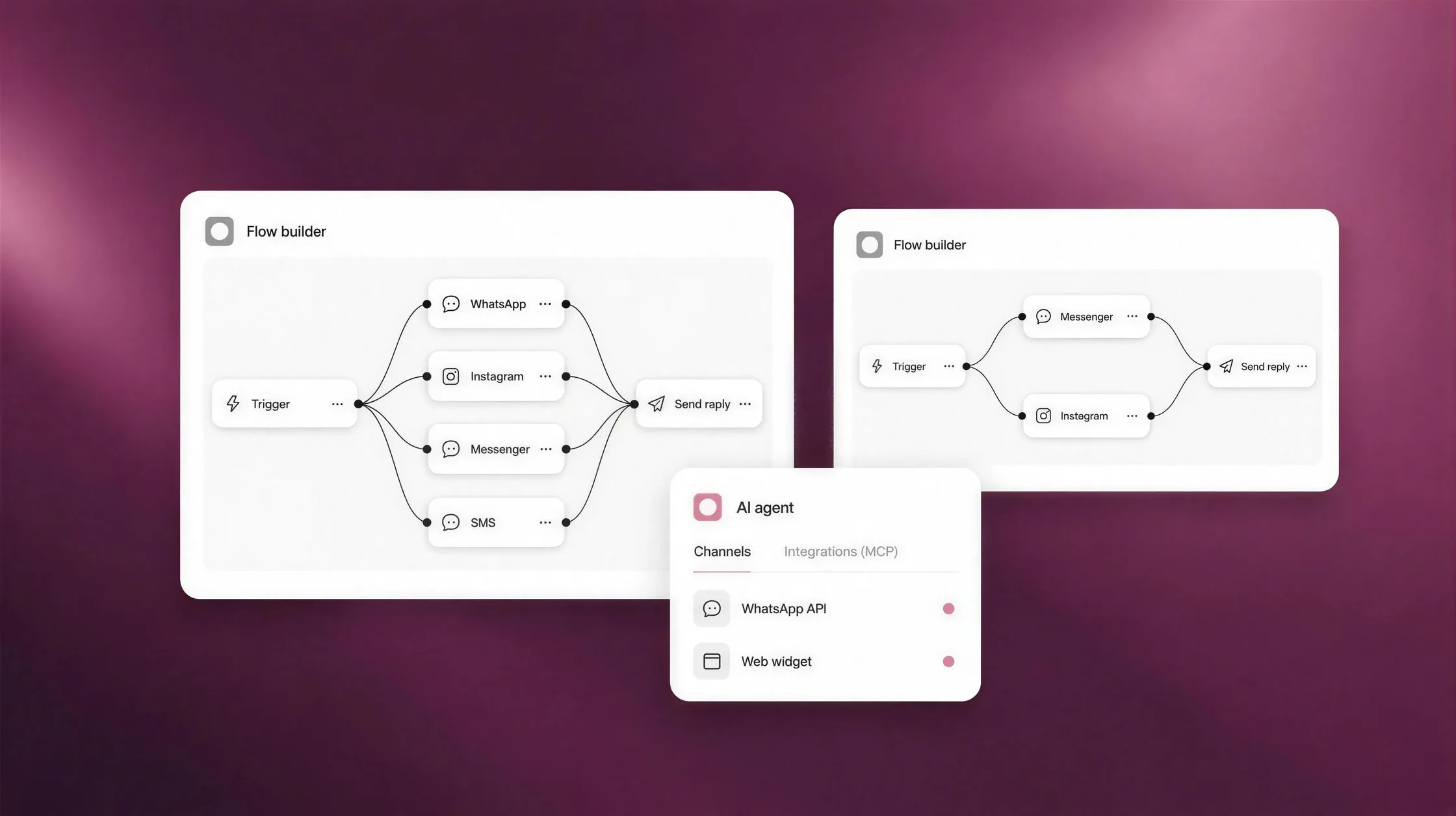
This is where the two products are more alike than either would like to admit. Both are flow builders. You draw a tree of triggers and conditions and replies, and the tree is what runs.
ManyChat’s tree is the more elaborate one, with more branching logic available as you move up the tiers. Chatfuel leans harder on AI generating the reply rather than you scripting every leaf.
But the mechanism is the same in both, and the mechanism is what decides how this feels in month six rather than week one. A flow answers what you anticipated. Everything you did not anticipate is either a new branch or a fallback message.
Pricing models compared
Here the two are genuinely opposite, and this is the section worth reading twice.
ManyChat prices by active contact, on a five-step ladder:
Scroll the table sideways
| Plan | Monthly | Annual | Included active contacts |
|---|---|---|---|
| Free | $0 | $0 | 25 |
| Essential | $17 | $14 | 250 |
| Pro | $39 | $29 | 2,500 |
| Business | $99 | $69 | 7,500 |
| Advanced | $199 | $139 | 25,000 |
Annual figures are the monthly cost when billing yearly.
Chatfuel prices flat. Its free Light plan has no card requirement, and AI PRO is $49 a month, or around $35 with annual billing. Active contacts are unlimited; what is capped instead is AI processing — consumed whenever the assistant generates a reply, classifies an incoming message or runs an AI-powered automation. Keyword replies, button flows and broadcasts do not draw on it at all.
So the comparison is not $17 against $49. It is a ladder against a flat line, and where they cross depends entirely on your contact count.
The number that decides it
Going over a ManyChat tier does not bump you to the next plan automatically — you are billed per additional contact, and that rate changes at every step:
Scroll the table sideways
| Plan | Per extra contact | Blended cost per included contact |
|---|---|---|
| Essential | $0.10 | $0.068 |
| Pro | $0.05 | $0.016 |
| Business | $0.025 | $0.013 |
| Advanced | $0.004 | $0.008 |
Blended cost is the plan price divided by its included contacts, at monthly billing.
Read the two columns against each other and the shape appears. On Essential, an extra contact costs about one and a half times what the average contact inside your plan costs. On Advanced, an extra contact costs about half. Between the top and bottom of the ladder there is a twenty-five-fold difference in the marginal rate.
That is worth knowing before you pick a starting tier, because the overage penalty is heaviest exactly where budgets are tightest.
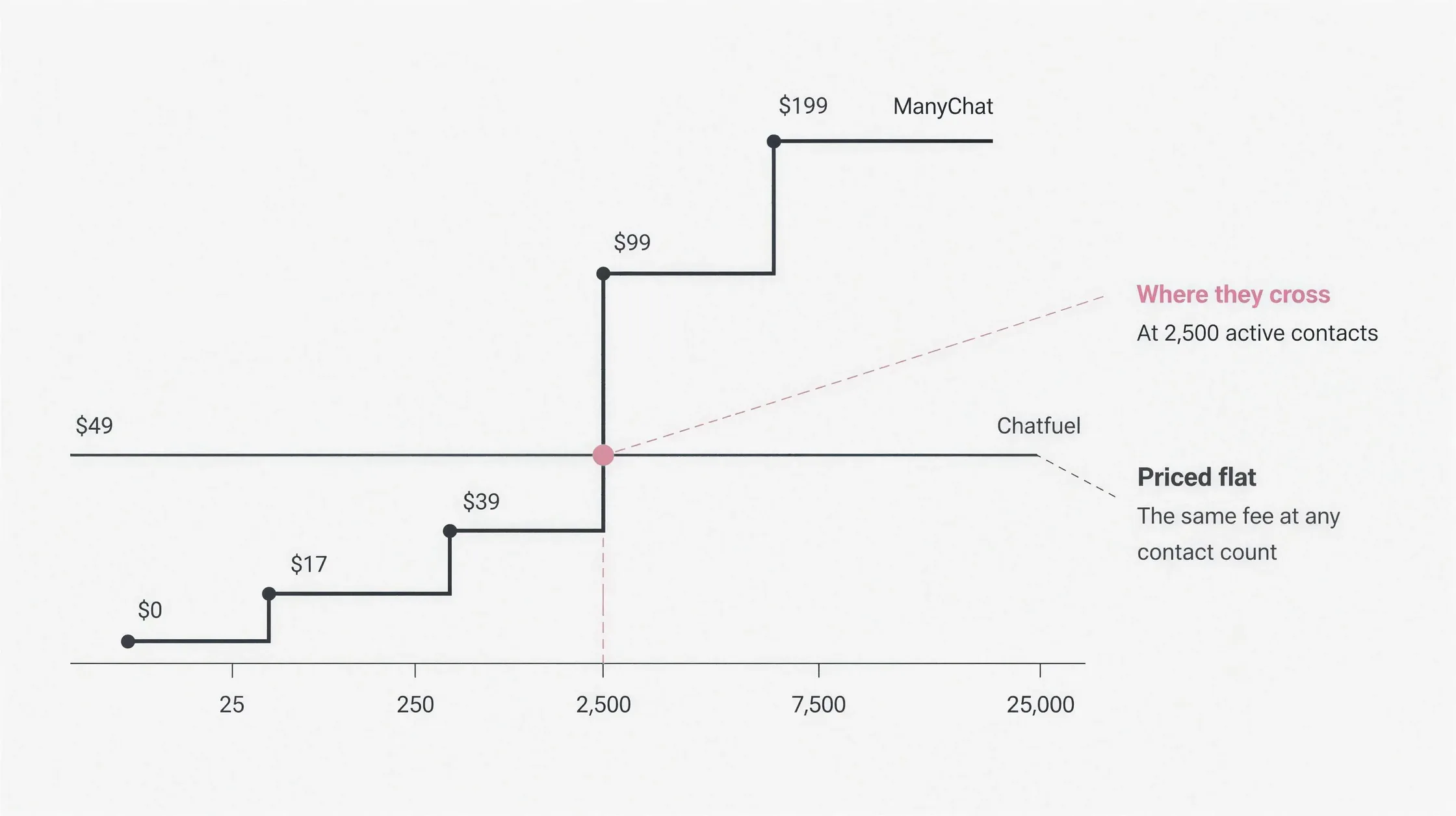
A ladder against a flat line: ManyChat’s cost rises with contact count in five steps, while Chatfuel’s stays level and meters AI work instead.
Templates, and how fast you ship
Both ship with template libraries, and both will get a working Instagram auto-reply live in an afternoon. ManyChat’s library is larger and more marketing-shaped — comment-to-DM, lead capture, giveaway mechanics. Chatfuel’s leans toward support and sales conversations.
Templates are a real advantage on day one and a smaller one by month three, because the parts you customise are the parts that break, and those are never the parts a template covered.
Where both hit the same wall
The wall is not a feature either one is missing. It is the mechanism they share.
A flow is a map of anticipated questions. It works beautifully while your customers ask what you expected. Then someone asks something adjacent — same intent, different words, one extra condition — and the flow either guesses wrong or hands off.
The fix inside a flow builder is always another branch. Then another. Six months in, the tree is a thing somebody owns, and the cost of the platform has stopped being the interesting number next to the cost of the person maintaining it.
Two things fall out of that, and neither is on a feature comparison:
- Maintenance scales with variety, not volume. Ten thousand people asking three questions is easy. Three hundred people asking eighty is not.
- Neither one becomes your product. ManyChat lets you remove its branding from $17 upward, and that is genuinely useful — but it is not reselling. Your client’s account is still their account, and there is no workspace under your name and no billing you control.
The third option: an agent instead of a flow
The alternative is not a better flow builder. It is a different mechanism.
A flow branches. An agent decides. Instead of matching an incoming message against a tree you drew, it reads what was actually asked, works out what to do, and reaches into your systems to do it. The question it has never seen before is a normal case rather than a fallback.
That difference shows up in maintenance more than anywhere else. There is no tree to keep accurate, so a new kind of question does not become a new branch — which is precisely the cost that grows fastest with a flow builder.
This is where Lety.ai fits, and it is worth being precise about the category: it is not a chatbot platform competing on templates and channel counts. It is infrastructure for building agents that reach the tools you already run — calendar, CRM, catalogue — through 900+ MCP integrations, because reaching them is what separates resolving a request from talking about it.
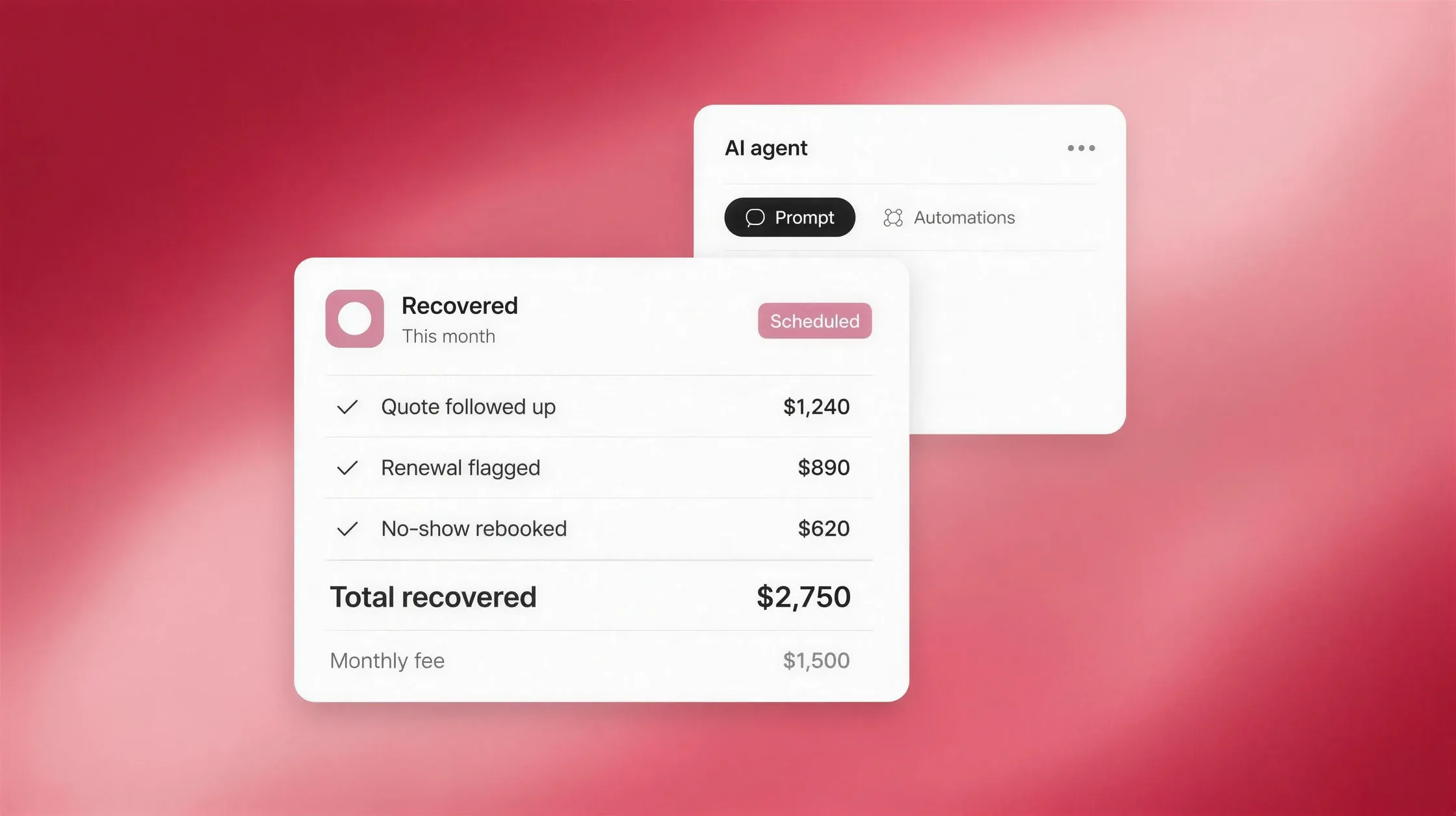
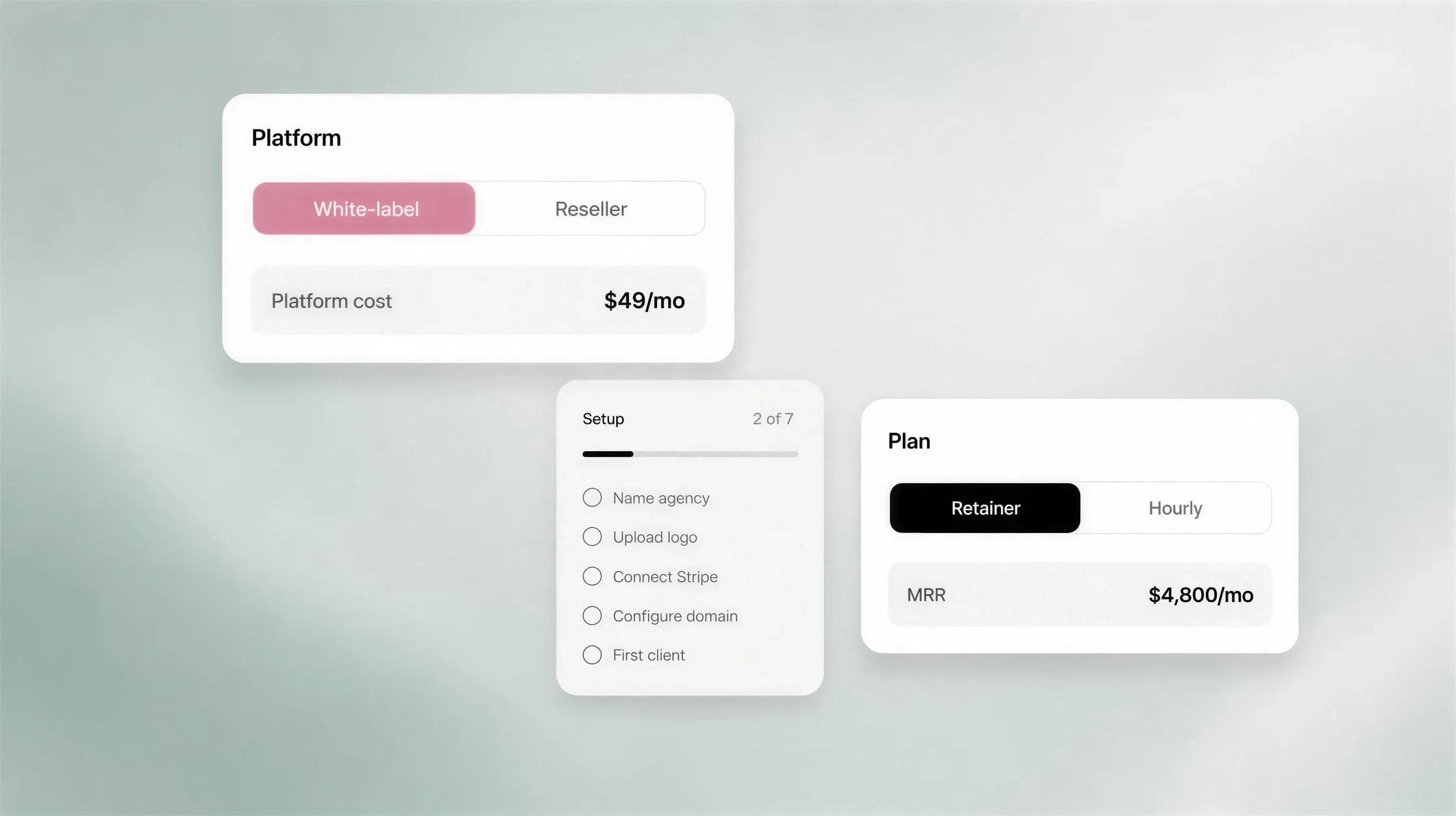
For agencies the more interesting difference is the one the second bullet above named. Selling automation as your own product needs three things neither ManyChat nor Chatfuel provides: an isolated workspace per client, your brand on what the client logs into, and billing you control. That is what the white-label platform is, and running it as your own product is what it looks like with clients attached.
Which one to pick
If the decision fits among these three:
- Small or slow-growing contact list, tight budget, Instagram-first. ManyChat. $17 a month for 250 contacts is the cheapest serious entry point, and its Instagram tooling is the more developed of the two.
- Large, spiky or unpredictable contact count. Chatfuel. Unlimited active contacts on a flat fee removes the variable that makes ManyChat’s bill hard to forecast.
- You need Instagram, Messenger and WhatsApp together. Check the channel caps before the price. On ManyChat that is $39 minimum, and WhatsApp brings Meta’s message charges either way.
And the honest third answer: if what pushed you into this comparison was a flow that keeps needing another branch, neither of them solves it. Adding branches faster is not the same as not needing them.
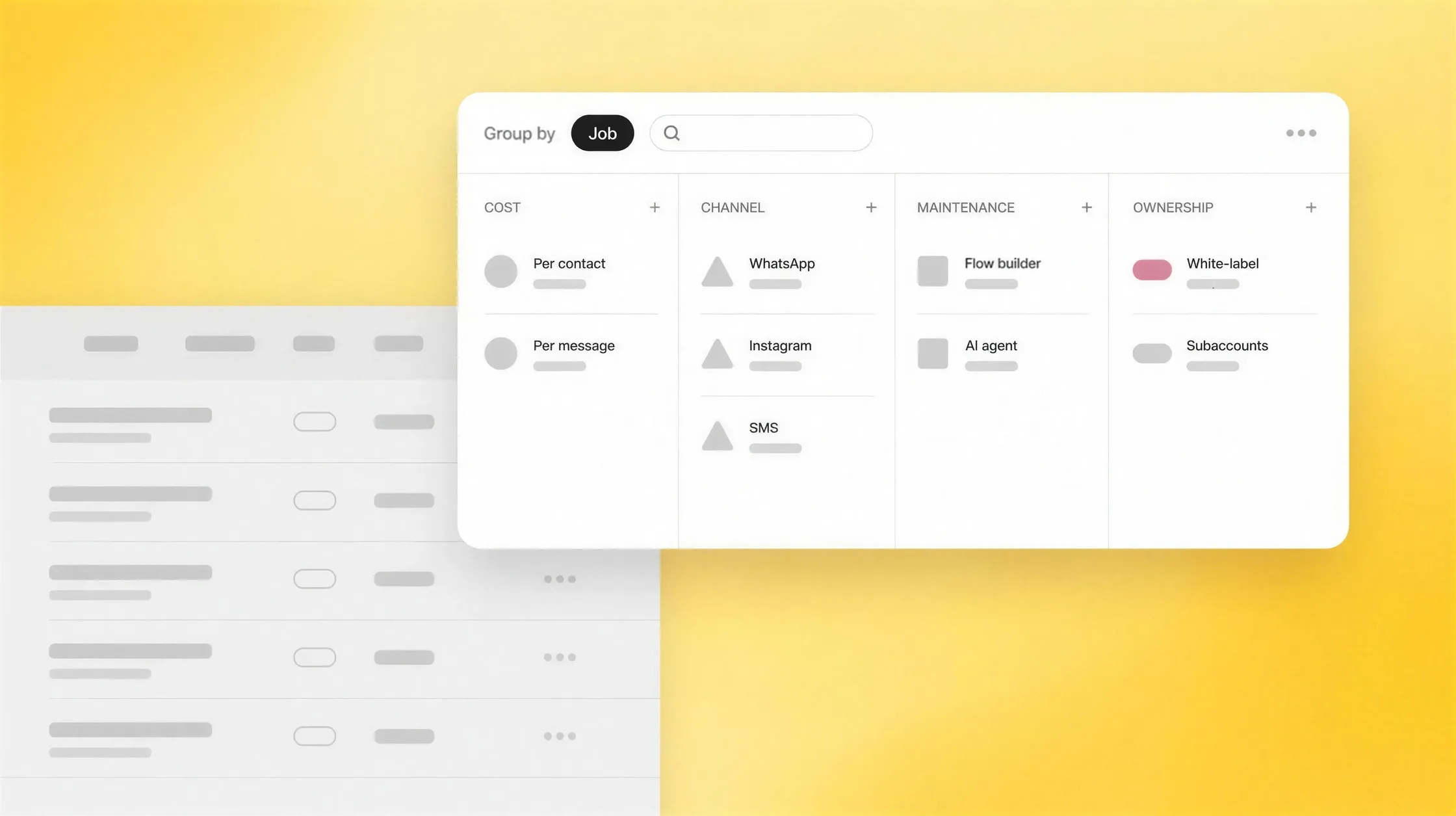
If neither shape fits, the wider field sorts more usefully by job than by product — that is what ManyChat alternatives, by what you actually need covers.
Plan prices and billing units taken from each vendor’s official pricing pages in September 2026. Both platforms revise tiers often, and WhatsApp message charges are billed by Meta separately from either plan: confirm current figures before projecting costs.