The awkward part of selling AI agents is that the thing you built is not quite the thing the buyer wants.
You built a system that reads messages, decides what to do and calls an API. What the buyer wants is to stop losing the enquiries that arrive after closing time. Those are the same object described from two sides, and only one of them has a price the client can evaluate.
Sell one measurable outcome, not a capability list. Build a narrow version on the client’s own content and demo that before you quote the full thing. Charge a setup fee plus a monthly subscription rather than one or the other. And know your cost per client before you quote, because that number is your floor and everything above it is the business.
Why an AI agent is the wrong thing to sell
To be clear about what this does and does not mean: you are selling AI, and there is no reason to hide it. Buyers are actively looking for it, and a client who understands they are buying an AI system is easier to sell the second one to.
What does not work is leading with the mechanism. “AI agent” describes how the thing is built, and few buyers hold a budget line for a mechanism.
They do hold one for the receptionist who is drowning, the enquiries that go cold overnight, the quotes that never get followed up. Those are problems with an owner and a cost, which means they are problems with a budget.
A useful test for your pitch: could the client repeat it to a colleague and have them understand what changes on Monday? If the answer needs a description of how the system works, you are pitching your build rather than their problem, and the conversation tends to end as a discussion about price with nothing to weigh it against.
It is also why capability lists tend to lose deals. Most competitors have a similar list, and little of it maps to anything the buyer measures.
Who buys, and what they are replacing
Most buyers are replacing something specific, and knowing which one changes the pitch entirely.
- A person’s time. Someone answers these messages today. The agent gives them their afternoon back. Usually the quickest sale, because the cost is already visible on the payroll.
- A service already being paid for. An answering service, an outsourced support desk. This is redirected budget, which tends to be easier than new budget.
- Revenue that leaks. Quotes nobody followed up on, carts left half-finished, clients who stopped booking and were never chased. Harder to quantify, higher ceiling, and the one where your discovery questions earn their keep.
- Work that only happens when someone remembers. Appointment reminders, renewal notices, the monthly check-in with a client. It gets done inconsistently and the cost of that is invisible until you total it.
- Nothing at all. They are doing it badly and absorbing the cost. This buyer needs awareness before a quote, and will take considerably longer to close.
The first two are where a new agency should spend its energy: the budget exists, the comparison is concrete, and the objection is about your solution rather than the whole category.
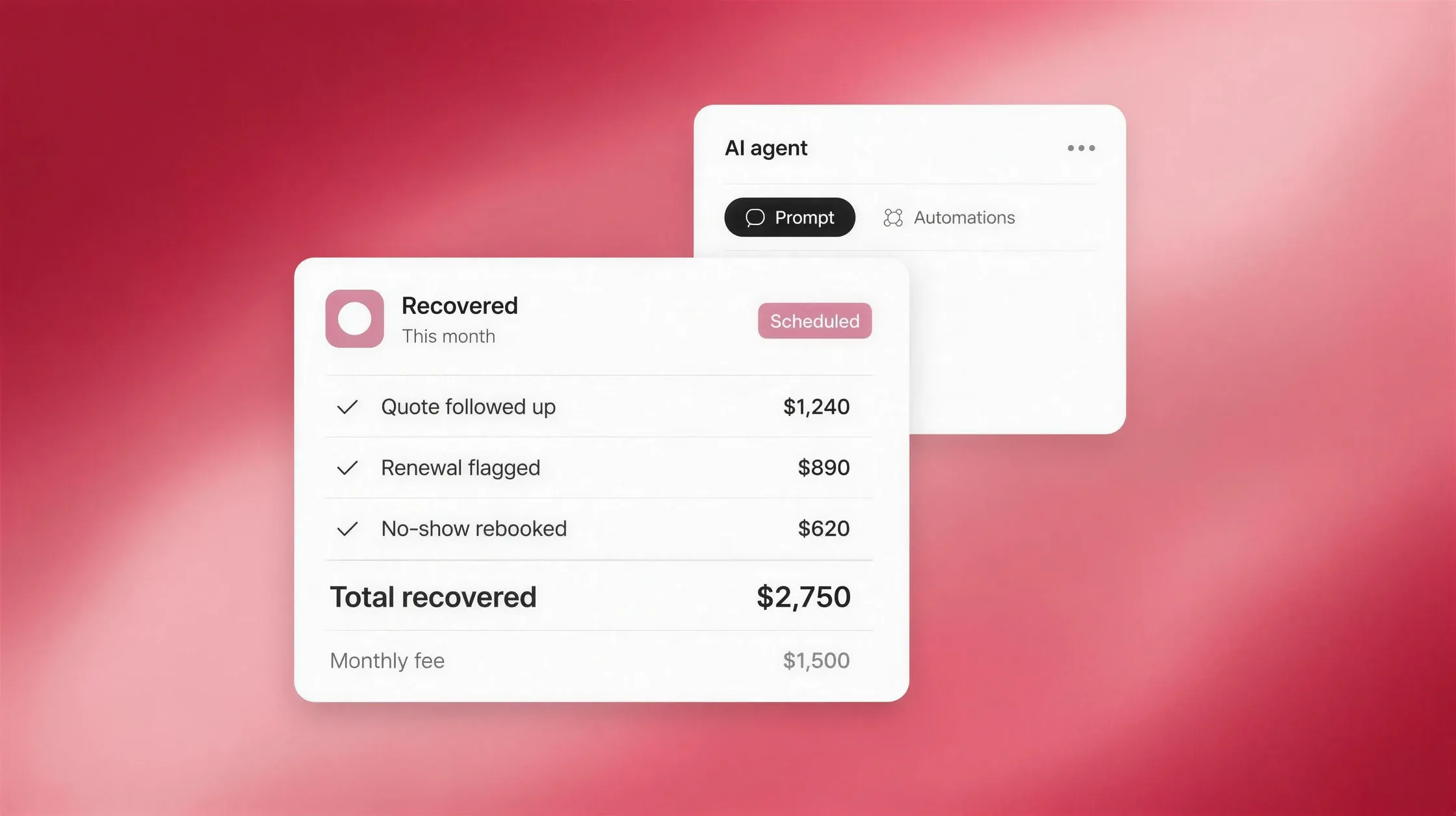
The following two are worth understanding because they change what you are able to sell. Answering a question well is reactive — value arrives only when a customer starts the conversation. Chasing an abandoned quote three days later, or sending a renewal notice the week before it lapses, means the agent acts without being prompted.
That is a different product, and a more valuable one, because it produces revenue rather than saving hours. It is also newer: scheduled automations on Lety.ai let an agent take actions proactively on a timetable you set, rather than waiting to be asked. If your pitch has been about saving time, this is where the second half of the offer lives.
Selling to small businesses
A small business is a different buyer from a mid-sized one, and the differences are structural rather than a matter of degree.
One decision-maker, often the owner. No committee, no procurement. That shortens the cycle dramatically and means the whole sale can happen in two conversations.
Very low tolerance for abstraction. A roadmap is not interesting. What is interesting is whether it will answer the question that a customer asked yesterday at 8pm.
Price sensitivity that is really risk sensitivity. The objection is rarely that the number is too high. It is that they cannot tell whether they will get anything for it. A short paid pilot answers that far better than a discount.
They will not implement anything themselves. If your offer requires them to configure, integrate or maintain, it is not an offer they can accept. Delivery is part of the product.
The pitch that works with this buyer names a process from their own week, shows it working on their real questions, and ends with a number they can approve without leaving the room.
Building the offer around one outcome
One process. One measurable result. One number.
The instinct is to offer more, because more feels like better value. It does the opposite: every extra capability adds a reason to hesitate, another stakeholder to consult, another thing that might not work.
A working offer has four parts:
- The outcome, stated in their language. “Every enquiry gets an answer within a minute, including at 11pm.”
- The scope, stated narrowly. Which conversations, which systems, what happens when it cannot answer.
- The proof, before they commit. A demo on their real content.
- The number, with the two components separated: setup and monthly.
Everything else — the channels, the model, the integrations — is implementation detail. Bring it up when they ask, and not before.
What to charge
Two numbers matter, and they are unrelated to each other.
Your floor is what the platform costs you per client, plus whatever usage that client generates. This is knowable before you quote, and quoting without it is guessing.
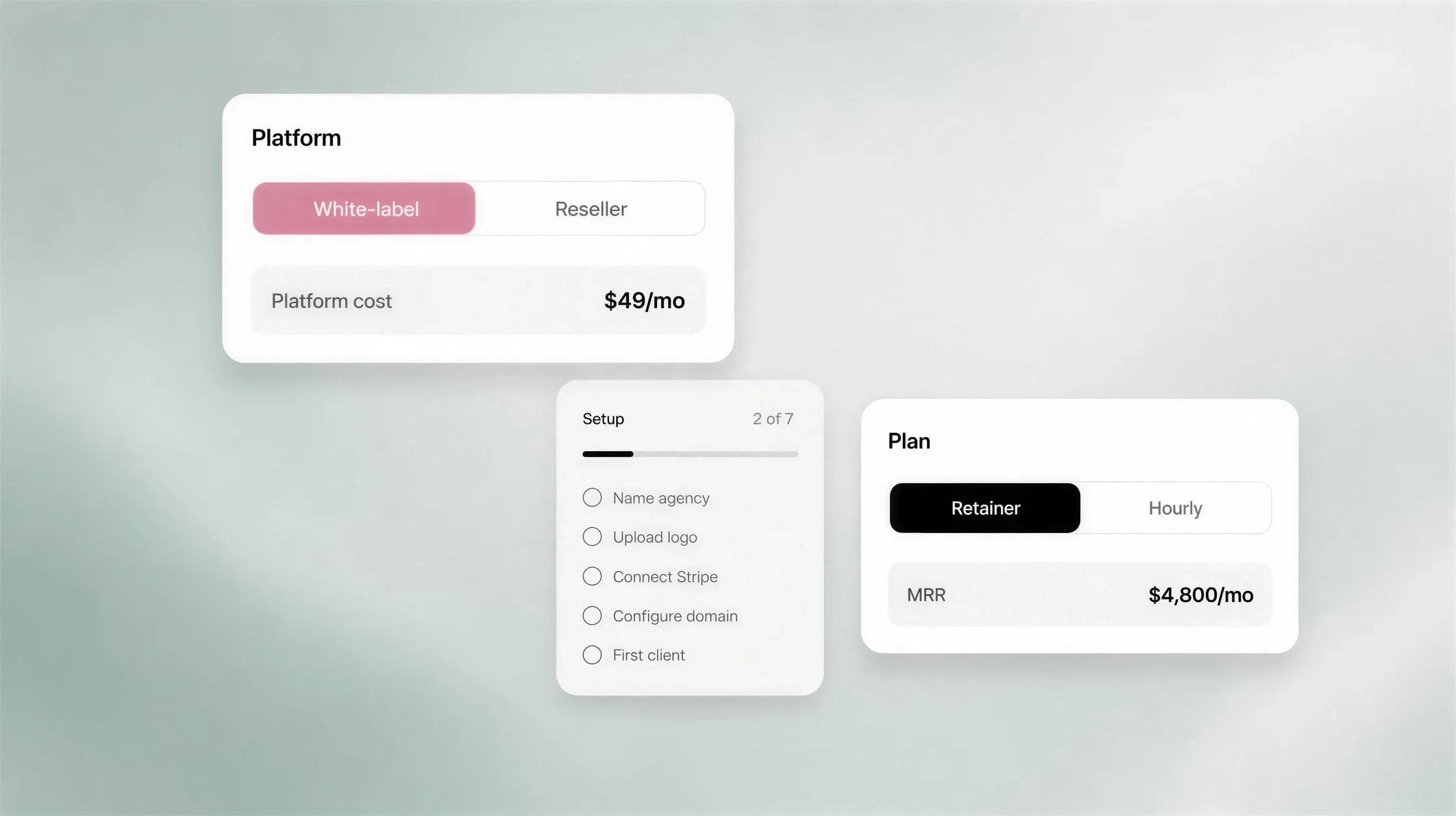
Platform entry tiers for agency work sit roughly between $97 and $197 a month, but the tier that carries your own brand is often several times that — CustomGPT.ai’s white-label tier is $499 against a $99 entry, and Vendasta’s is a $499 monthly minimum in wholesale spend on a one-year contract. Whatever you pick, divide it by the number of clients you can realistically put on it. That is your real per-client cost, and it is the number two platforms with identical headline prices can differ on the most.
Two questions decide it: how many client workspaces the tier allows, and whether branding is included at that tier or gated above it. Where branding starts at the entry tier and workspaces are not individually metered, the floor per client falls as you add clients rather than rising with them — which is the shape Lety.ai’s pricing is built on.
Their anchor is the cost of the problem. The salary fraction, the answering service invoice, the value of the enquiries currently going cold. Ask for it during discovery and they will usually tell you.
You price between the two, closer to their anchor than to your floor. What you are selling is the gap between what the problem costs them and what your solution costs them — not the hours you spent building.
Three structures, one of which is a business:
Scroll the table sideways
| Structure | What it produces | Where it breaks |
|---|---|---|
| Hourly | A freelance income | Hard ceiling at your waking hours |
| Flat project fee | A margin you earn once | Every delivery returns you to zero |
| Setup + monthly | A business that compounds | Needs the client to keep depending on it |
The setup fee covers delivery time; the subscription is the asset.
The demo that closes
Build a narrow agent on their real content before the meeting.
Not a slide deck, not a generic demo, not a recorded walkthrough of somebody else’s deployment. Take twenty questions their actual customers ask, feed it their actual pages or catalogue, and let them type into it live.
Two things happen. The abstract becomes concrete, and the conversation moves from whether this works to what else could it do — which is a conversation about scope, and scope conversations end in quotes.
The objection to doing this is that it is work you might not get paid for. It is, and it is worth it: an afternoon is a low price for the highest-converting asset in the whole process, and the same demo is reusable across the rest of the clients in that niche.
Let it fail in front of them, too. When someone asks something outside scope and the agent hands off cleanly, that is a feature demonstration, not an embarrassment — it shows them what happens on the edge cases they are already worrying about.
The four objections you will keep hearing
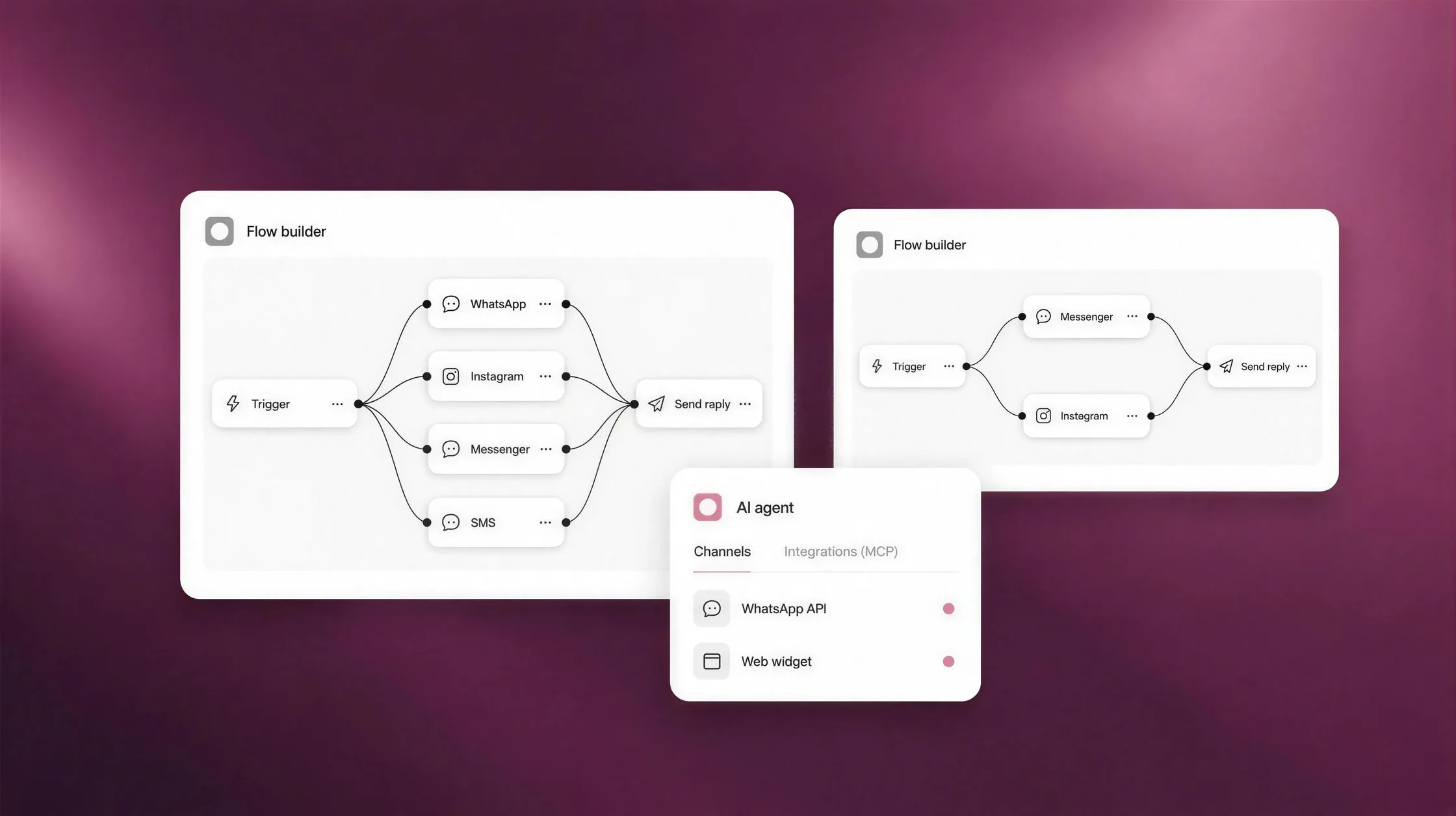
“ChatGPT is free.” Agree with them, then separate the two things. A general assistant answers questions. What you are selling reaches their calendar, their CRM and their catalogue and does something. The difference is access, not intelligence — and access is what turns an answer into a booking. On Lety.ai that reach is 900+ MCP integrations, which is the part a general assistant structurally cannot replace.
“What if it says something wrong?” Show the boundary. Explain what happens when the agent is unsure, show the handoff, show the transcript log. Few buyers expect perfection; they expect to know what happens when it falls short.
“We tried a chatbot and it was terrible.” Very likely true — most of them tried a scripted flow that could only answer what somebody anticipated. Name that difference explicitly, because it is the single most common reason this buyer is sceptical, and it is a difference you can demonstrate in ninety seconds.
“Can we just pay once?” This is the important one, and the answer should be no. Explain what the subscription covers — the agent running, the model costs, the changes as their business shifts — and if you cannot defend it, your offer is a build rather than a service. Discount the setup fee instead.
From project to monthly revenue
Recurring revenue is rarely a stage you reach. It is closer to a decision you make in the first contract.
A build with no subscription attached tends to stay a build, however well it goes. Project work does not turn into recurring revenue on its own.
What makes the subscription defensible is operational dependency. The agent is answering their customers today; switching it off is a visible downgrade to their business, not a cost saving. That dependency is worth more than any contract clause you could write.
Three mechanics decide whether the recurring part is actually yours:
- The client pays you, not the platform. If the second holds the subscription, they are the platform’s customer and you are a consultant they can remove from the middle.
- One invoice, under your name. A client receiving two bills has understood that they are paying a vendor plus a markup.
- You set the price independently of your cost. These are two different numbers, and controlling both is what margin means.
This is where the platform underneath you stops being a tool and becomes the business model. Isolated workspaces per client, your brand on what they log into, and subscriptions plus setup fees charged through Stripe Connect on a single invoice that goes out under your name.
Those mechanics are what the reseller program is built around. For the commercial picture of selling AI agents under your own name, the landing page covers it end to end.
Where the margin lives
The margin is the spread between what you charge and what the client costs you to serve, and there are only three levers on it.
What you charge, which is set by the outcome rather than by your effort. This is the lever with the most room in it, and the one most people rarely revisit after their first quote.
What the platform costs you per client, which is a division problem: the tier price divided by how many clients you can put on it. Moving from four clients to twelve on the same subscription changes your margin more than any price increase.
What the platform takes from what you collect, which is the one people forget to ask about until it is too late. Some models take a share of your revenue, which means your margin shrinks as you grow — precisely backwards.
On that last point, worth being direct because it is the first question an agency should ask any platform: on Lety.ai there is no revenue share on the subscriptions you charge your clients. The only platform fee on what you collect is a transaction fee in the 1.9–4.9% range on payments processed through Stripe Connect, and the rate drops as you move up tiers. Current tier ranges are on the pricing page.
Ask any platform you are considering the same question, and get the answer in writing before you sign a client. A rev-share discovered in month eight means repricing the contracts you already hold.
After the first ten sales
The problems change shape, and they change in a predictable order.
Delivery becomes the constraint, not sales. Once the pitch works, your pipeline outruns your capacity. The fix is templating your delivery — the same niche, the same processes, the same integrations — which is the compounding argument for staying narrow.
Support arrives. Ten live agents generate questions, tweaks and the occasional outage. Decide what the subscription covers before a client decides for you.
Your early pricing looks wrong. The first clients were priced by someone who had never delivered this. Raise prices for new clients rather than existing ones, and let the early accounts be the case studies that justify the new number.
Concentration becomes a risk. If two clients are half your revenue, they are not clients, they are employers. The eleventh sale matters more for the shape of the business than the tenth.
If there is one thing to carry out of all this: closing the sale is the easy half. The offer, the demo and the objection handling are learnable in a few months. What decides whether you have a business is the contract you write and the platform economics underneath it — and both of those are settled before the first client says yes.
Starting from further back, how to start an AI agency covers the two decisions that come before any of this.
Platform pricing taken from each vendor’s official pricing pages, verified August and September 2026. These platforms revise tiers often, and several distinguish between branding you can use and branding you can sell: confirm current terms before pricing a client.