Most articles about AI agents describe a future. This one describes what you can deploy this quarter, what it will cost, and where it still fails.
What an AI agent actually is
An AI agent is software that completes a task end to end. It reads a request, decides what to do, uses whatever tools it needs, and reports back — without a person approving each step.
The distinction that matters in practice is against the chatbot you already know. A scripted chatbot matches your question to a pre-written answer. If you ask something the script does not cover, it apologises and offers a phone number. It cannot look anything up, and it cannot change anything.
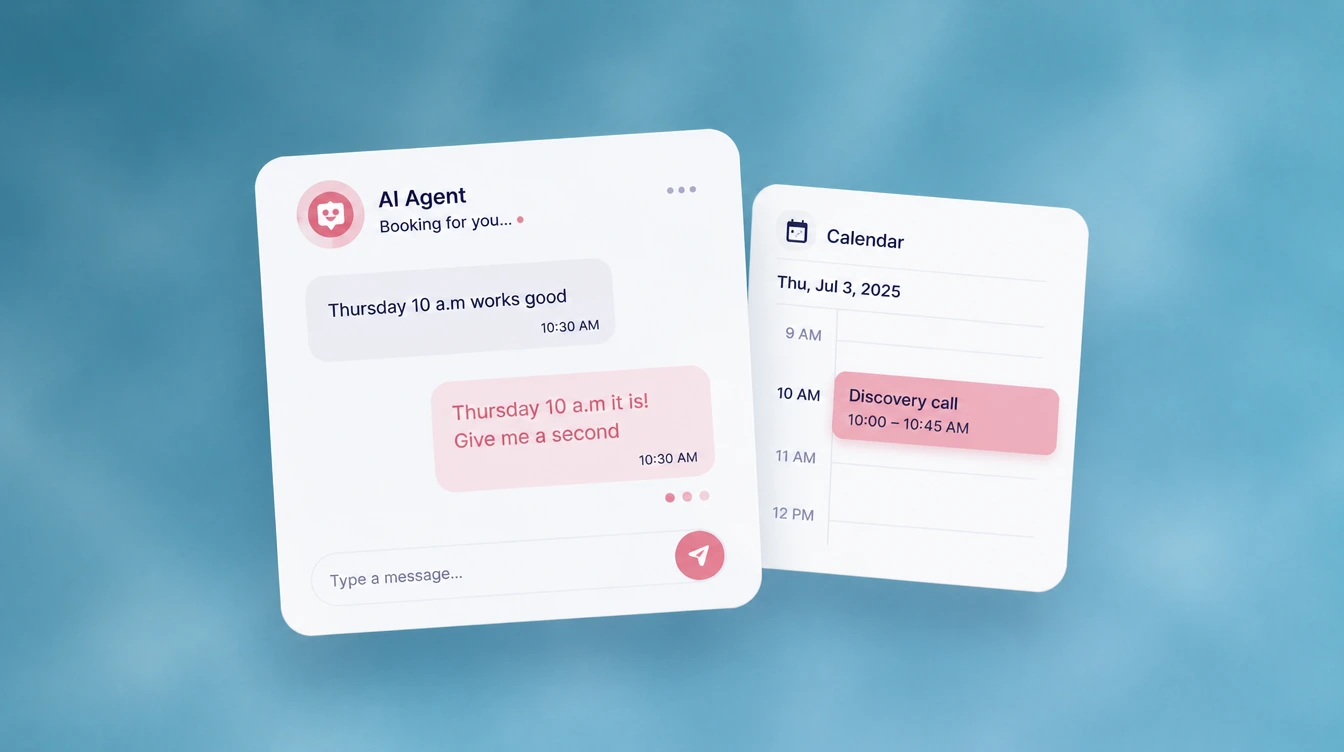
An agent can. Asked “do you have any openings on Thursday?”, it queries the calendar, finds the gaps, offers them, takes the booking, and writes it back. The conversation is the interface; the work happens behind it.
That difference is why the two fail differently. A chatbot fails visibly and harmlessly — it says something unhelpful. An agent fails by taking a wrong action, and a wrong action has consequences. This is the single most important thing to understand before deploying one, and it shapes every recommendation below.
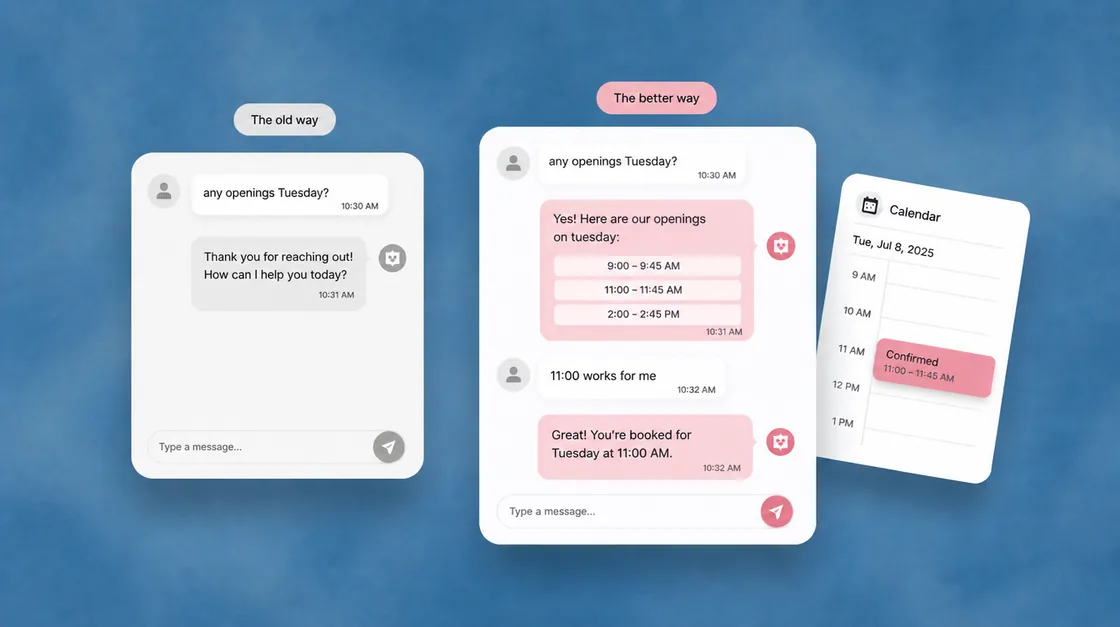
A chatbot matches your question to a pre-written answer. An agent queries the calendar, offers real slots, and writes the booking back.
A chatbot answers. An agent acts. Judge an agent by what it is allowed to change, not by how well it writes.
What AI agents actually automate today
Vendor demos gravitate toward the impressive. Real deployments cluster around the boring and repetitive, because that is where the arithmetic works. Five patterns cover most of what is running in production right now.
Answering the questions you answer constantly. Hours, location, price ranges, whether you take a given insurance, whether you serve a given postcode. For most small businesses this is the majority of inbound volume, and none of it needs a human.
Qualifying inbound leads. The agent asks the three or four questions your sales process needs, and routes the ones worth a person’s time. The value is not speed — it is that every enquiry gets asked the same questions, including the ones that arrive at 11pm on a Sunday.
Booking and rescheduling. The highest-value pattern for anyone whose revenue depends on a calendar. It requires a real integration with your scheduling system, which is the part that separates a working deployment from a demo.
Order and status lookups. Where is my order, when does my policy renew, what is my balance. Cheap to automate, immediately noticeable, and it removes the queries staff most resent.
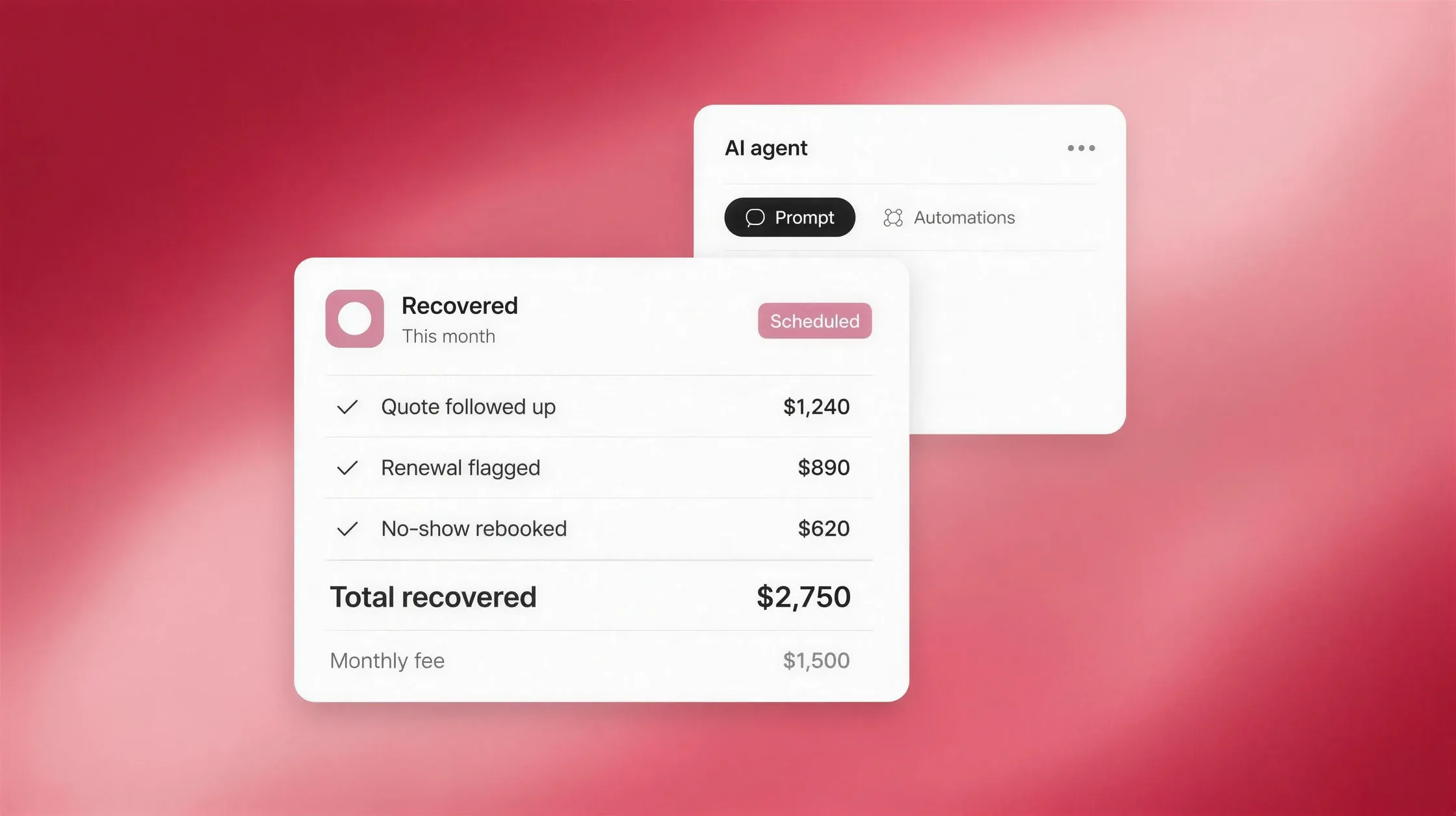
Follow-up. Nudging quotes that went quiet, confirming appointments, chasing forms. Follow-up is the work that gets dropped first when a team is busy, which makes it the ideal thing to hand over.
Notice what is missing: nothing on that list involves the agent inventing an answer. Everything either retrieves a fact or performs a defined action. That constraint is what makes those five patterns reliable — and it is the pattern to copy when you evaluate anything else.
The types worth knowing about
Categories in this space are marketing artefacts more than engineering ones, but three distinctions genuinely change what you buy.
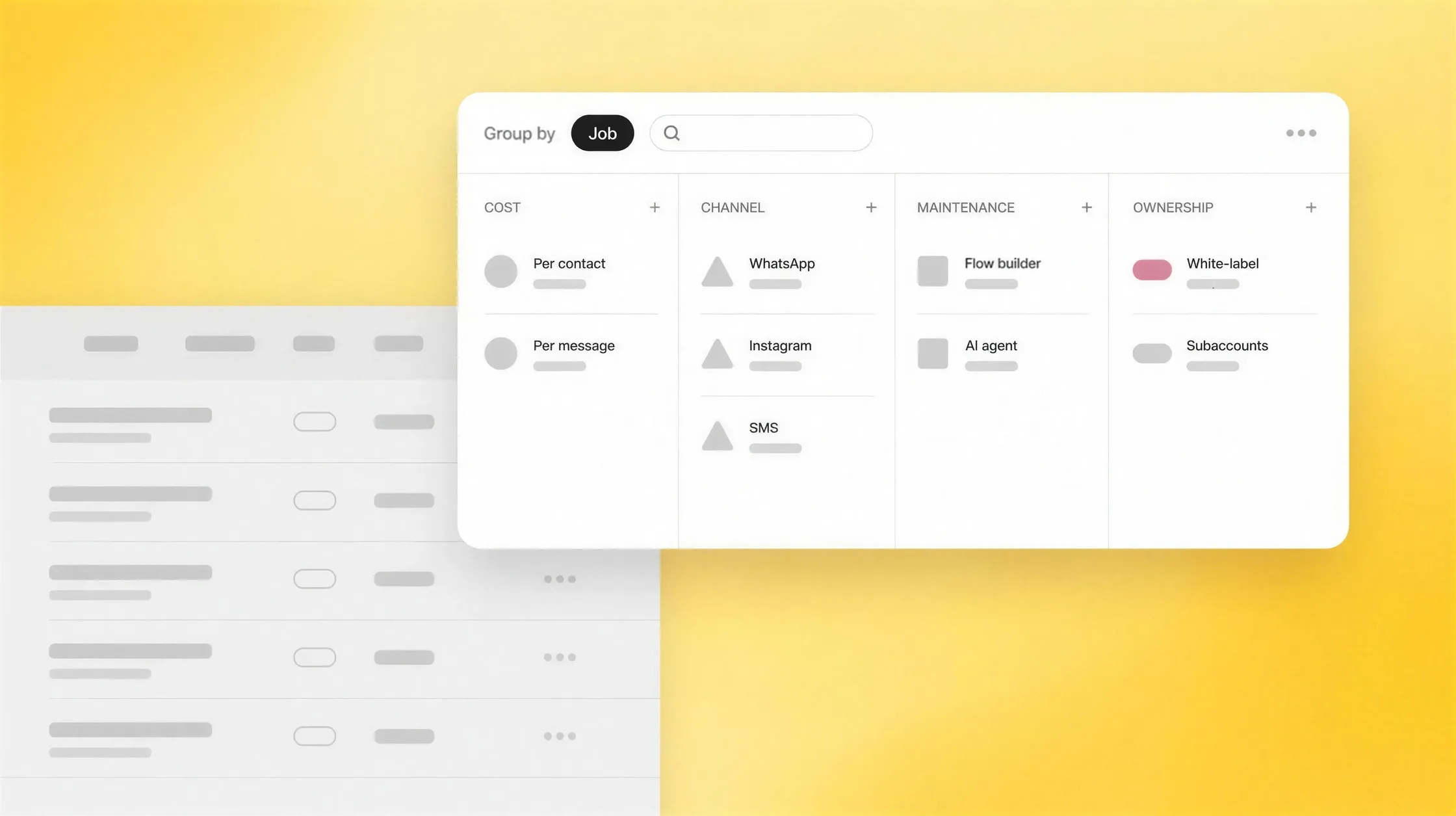
By channel. Website chat, WhatsApp, Instagram, email. This matters more than it sounds: your customers already have a preferred channel, and an agent on the wrong one gets no traffic. Deploy where the messages already arrive.
By whether it can act. Read-only agents answer from your documents. Transactional agents change something — a booking, a record, an order. Read-only is faster to launch and safer to run. Start there unless the value is specifically in the action.
By how deeply it connects. An agent is only as useful as the systems it can reach. An agent that cannot see your calendar cannot book. This is where most disappointing deployments fail, and it is worth checking before anything else: on Lety.ai, agents reach 900+ MCP integrations, which is the layer that decides whether an agent can actually do the job or only talk about it.
Pick the channel by where your messages already arrive, and start read-only. The integrations decide whether the agent works; the model decides how it sounds.
What they cost
Pricing in this market takes three shapes, and they are not equivalent.
Per-conversation or per-resolution. You pay for what gets used. Predictable when volume is flat, and unpleasant when it is not — a good month costs more, which is a strange incentive.
Per-seat. Borrowed from software licensing and a poor fit: an agent’s value has nothing to do with headcount.
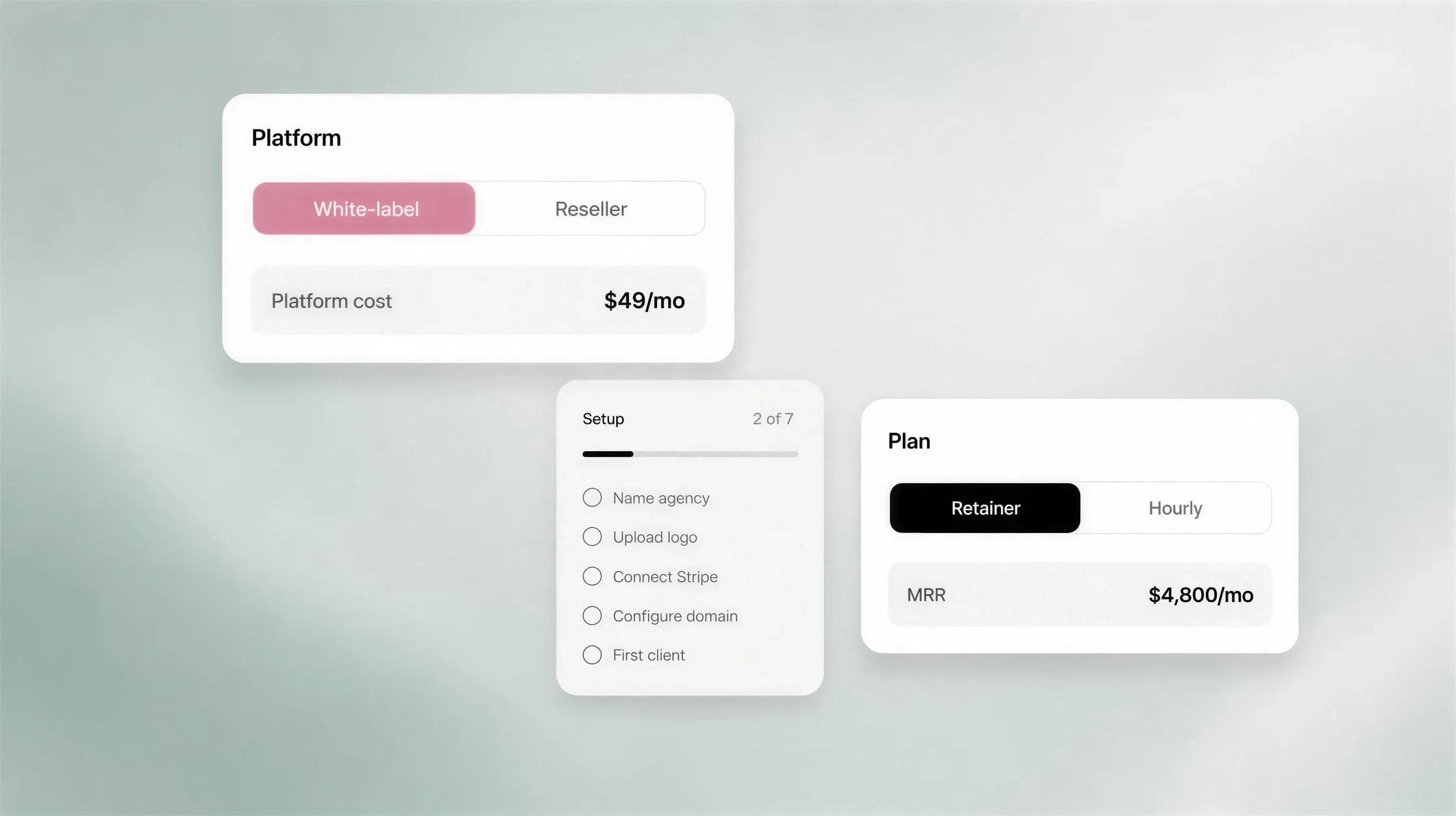
Flat platform fee. A fixed monthly cost regardless of volume. Harder to justify at very low volume, and much easier to plan around once the agent handles real traffic.
Two costs sit outside the sticker price and are routinely underestimated. The first is setup: connecting systems, loading your content, and testing the paths that matter. The second is maintenance — your prices change, your services change, and an agent quoting last season’s prices is worse than no agent.
Budget for a review cadence from the start. The businesses that get value from agents are the ones that treat them as something maintained, not something installed.
Build, buy, or hire
Three routes, and the right answer depends less on budget than on where your constraint sits.
Build in-house if you already employ people who ship software and the agent is close to your core product. It is the only route that gives you full control, and the only one where the cost keeps arriving after launch. For most businesses whose product is not software, this is a distraction.
Buy an off-the-shelf tool if your use case is standard — appointments for a clinic, FAQs for a shop. Fastest to live, cheapest to start, and it stops exactly where the vendor’s assumptions stop. If your process has a genuine quirk, you will meet that wall quickly.
Hire an agency if you want it configured around your business without hiring engineers. You are buying judgement about which processes to automate first, which is usually the part that decides whether the project works. The trade-off is dependency: ask who owns the agent and the data if you part ways, and get the answer before you sign.
Buy if your use case is standard. Hire if your process is specific. Build only if software is already what you do.
Your first 30 days
The most common failure is not choosing the wrong tool. It is starting too broadly — automating everything at once, so nothing is measurable and every problem is entangled with every other.
A narrower start works better:
- Spend a week counting. Log every inbound question for five working days. You are looking for the one question that arrives most often. It is almost never the one you would have guessed.
- Automate that one question only. One question, one channel, read-only. This is deliberately unambitious — it gets a working agent in front of real customers while the stakes are still low.
- Read the transcripts daily. Every day, for two weeks. This is the step people skip and the one that produces all the learning: you will find questions you did not know customers asked, and phrasings your content does not cover.
- Add the ability to act, once. Usually booking. Now the agent changes something, so test the failure paths — double bookings, cancellations, ambiguous dates — before it meets the public.
- Then widen. More questions, then a second channel. By now you have transcripts, and you are expanding on evidence instead of on assumption.
Thirty days of this beats six months of planning, because the transcripts tell you things no amount of planning would have.
Where to go next
If you are a business deploying agents for your own operations, the sequence above is the whole recommendation: start narrow, read the transcripts, widen on evidence.
If you are reading this from the other side of the table — you want to build agents and sell them to businesses like the one described here — that is a different job with different economics, and it is what Lety.ai is built for. Over 1,000+ agencies build on the platform, with 2,000+ AI agents deployed under their own branding rather than ours. The starting points are selling AI agents under your own brand and running the whole thing as a chatbot SaaS.
The two audiences read the same technology very differently. Worth knowing which one you are before you start.